Church history in 20 places
One line runs from Jerusalem to Chalcedon. Then it forks — East and West go their separate ways for a thousand years, and in 1517 the Western branch splits again. Step through, and the map travels with the story.
Where the church is, at this point
The forking of Christendom — tap any place
Scroll the timeline sideways →
00
Jerusalem
What happened here
The place where Christ, the Son-of-God-become-man died on the Cross, was raised from the dead on the third day, and from where he ascended back to heaven. This is also where the Holy Spirit was poured out on the first disciples.
People of interest
Peter apostle
A fisherman from Galilee who denied Jesus and then preached the sermon at Pentecost that added three thousand people to the church in a single day.
James led the Jerusalem church
The Lord’s brother, sceptical during Jesus’ ministry, who became the settled head of the church here and was executed around AD 62.
Stephen deacon, first martyr
A Greek-speaking deacon stoned after his speech to the council; the persecution that followed scattered the church out of Jerusalem for the first time.
Meanwhile, in the other half
Rome is at the height of its power. The temple is still standing, but not for much longer.
01
Ephesus
What happened here
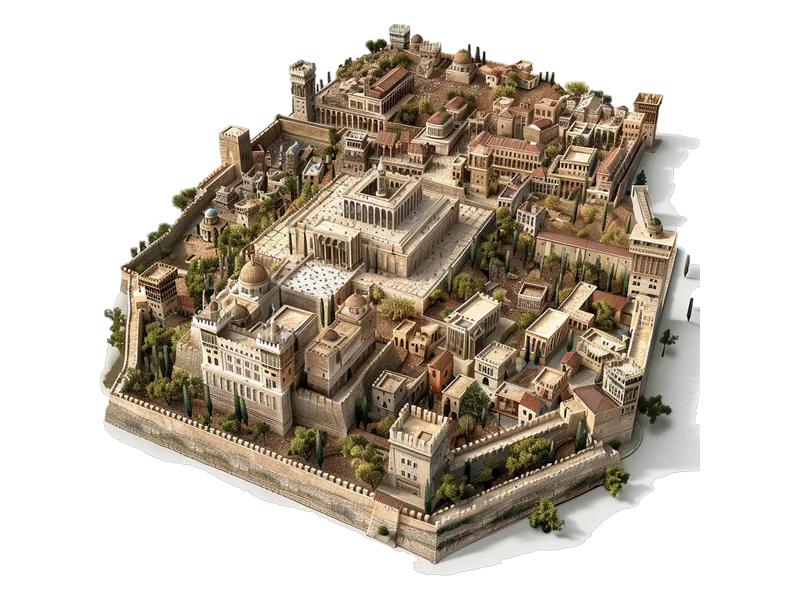
The place where the Apostles, Paul and John, handed over to the next generation of Christian leaders, which included the “Apostolic Fathers”. One such “Apostolic Father”, Ignatius of Antioch (d.110), passed through Ephesus on his way to martyrdom at Rome, and addressed a letter to the church at Ephesus.
People of interest
John apostle
Placed in this city in his old age by early tradition; the Gospel and letters bearing his name are tied to Ephesus.
Ignatius of Antioch bishop, d. 110
Marched across Asia Minor to die in Rome, writing seven letters on the way and begging the churches not to try to save him.
Polycarp bishop of Smyrna
Said to have known John personally; burned at the stake aged eighty-six after refusing to curse Christ, forming a living link back to the apostles.
Meanwhile, in the other half
The last people who knew Jesus personally are dying. Everything now rests on what they handed on.
02
Athens
What happened here
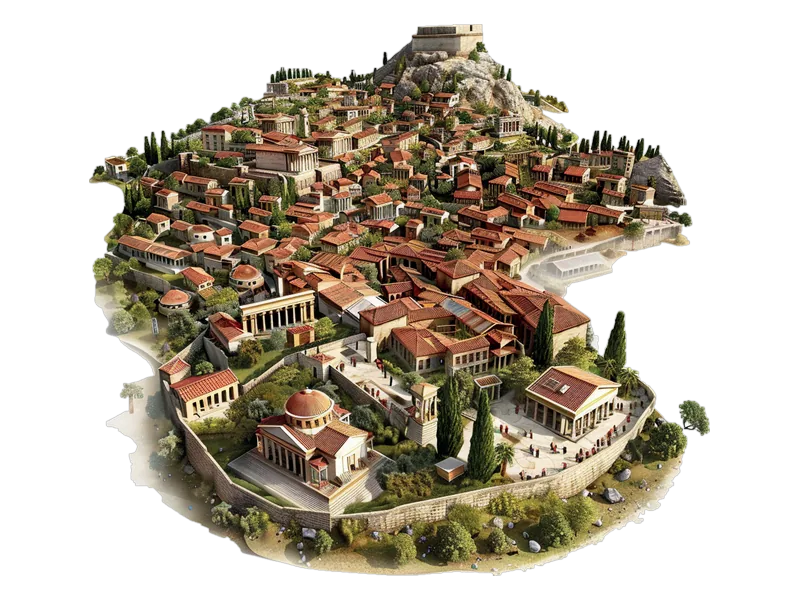
The centre of Greek thought, which Justin Martyr and other Second Century Apologists addressed in their presentations of the Christian faith, proclaiming Christ as the Logos (the Word or principle underlying the universe).
People of interest
Justin Martyr philosopher, d. c. 165
Kept wearing his philosopher’s cloak after conversion and argued that whatever is true in Greek thought already belongs to Christ.
Athenagoras apologist
Wrote a reasoned plea to Marcus Aurelius asking only that Christians be tried on evidence rather than on rumour.
Clement of Alexandria teacher
Made the same move further south, treating Greek philosophy as a schoolmaster leading the Greeks toward Christ.
Meanwhile, in the other half
The empire regards Christians as an antisocial superstition. The Apologists are trying to change that.
03
Lyon
What happened here
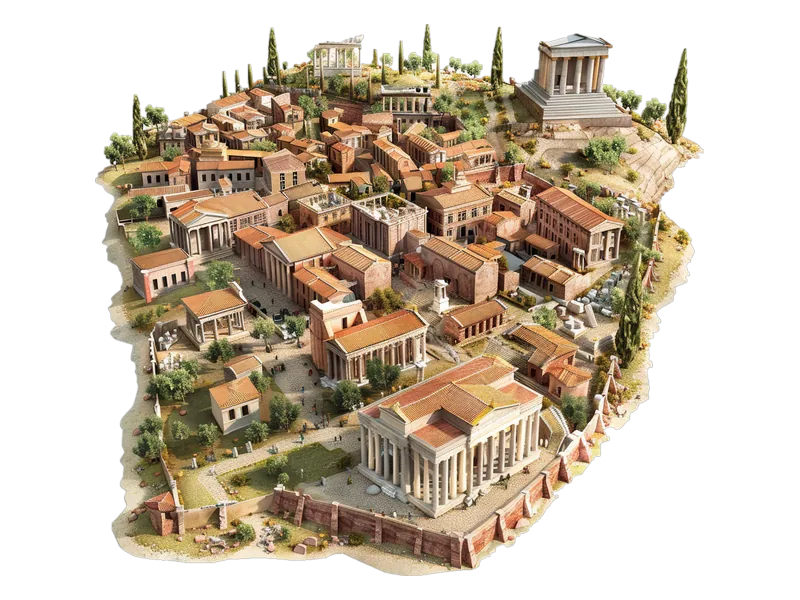
The church in this city was founded by immigrants from Smyrna in Asia around 177. Following intense persecution, this is where Irenaeus was later bishop, combatting the Gnostic heresy. Irenaeus asserted that the material world was the good creation of the Eternal Word. That same Word became “flesh”, and became the head of a redeemed human race, undoing the Fall, and replacing Adam (“recapitulation”).
People of interest
Irenaeus bishop from c. 177
His Against Heresies is the first great work of Christian theology, insisting that the physical world is good because God made it and the Word entered it.
Blandina martyred 177
Tortured through an entire day in the amphitheatre; the written account of her endurance circulated across the empire.
Pothinus bishop, d. 177
Around ninety years old when he died in prison during the same persecution, leaving his post to Irenaeus.
Meanwhile, in the other half
The gospel is spreading along trade routes, carried by ordinary migrants rather than any organised mission.
04
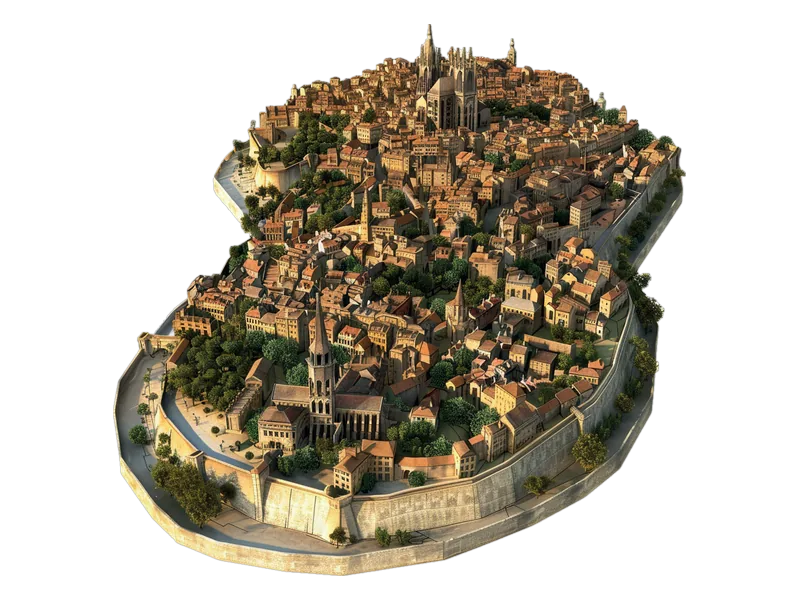
Carthage
What happened here
A place where the church stood firm against persecution in the days of Tertullian and later Cyprian, representative of all the sufferings of Christians and martyrdom. The greatest persecution came to an end in 311, leading to toleration of the Christian faith.
People of interest
Tertullian writer, c. 155–220
A trained lawyer who gave Latin Christianity its vocabulary, including the word Trinity, and who eventually left the mainstream church for a stricter one.
Cyprian bishop, martyred 258
Had to decide what to do with Christians who had sacrificed to save their lives; his answer — penance, then restoration — shaped Western practice ever after.
Perpetua martyred 203
A young mother of good family killed in the arena; her prison diary is the earliest surviving writing by a Christian woman.
Meanwhile, in the other half
The empire tries to break the church by force for the last time, and does not manage it.
05
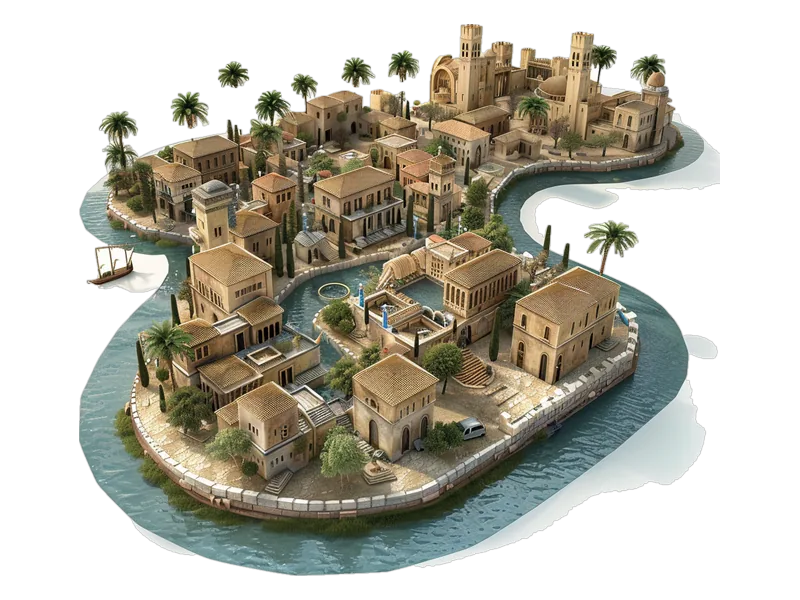
Nicea
What happened here
Following toleration of the Christian church in 311 and 313, Nicea was the venue for the First Ecumenical Council in 325 which asserted that the Son is consubstantial (equal) with God the Father. The later Second Council at Constantinople in 381 also asserted that the Spirit is Holy, Lord and Life-Giver. It was at this time that the church found words to express the truth that God is Father, Son and Holy Spirit (Trinity). The 300s were a Golden Age of Christian thinkers with greats such as Athanasius, the Cappadocian Fathers, Ambrosius of Milan and others.
People of interest
Constantine emperor
Summoned and paid for the council of 325 and sat in on it, mostly wanting the argument settled so that the empire could be governed in peace.
Arius presbyter of Alexandria
Taught that there was a time when the Son was not; the council ruled against him, and the argument ran on for another sixty years regardless.
Athanasius bishop of Alexandria
Attended as a young deacon and spent the rest of his life defending the Nicene position, exiled five times for his trouble.
Meanwhile, in the other half
Persecution ends and imperial favour begins. The church gains its freedom and a new set of problems.
06
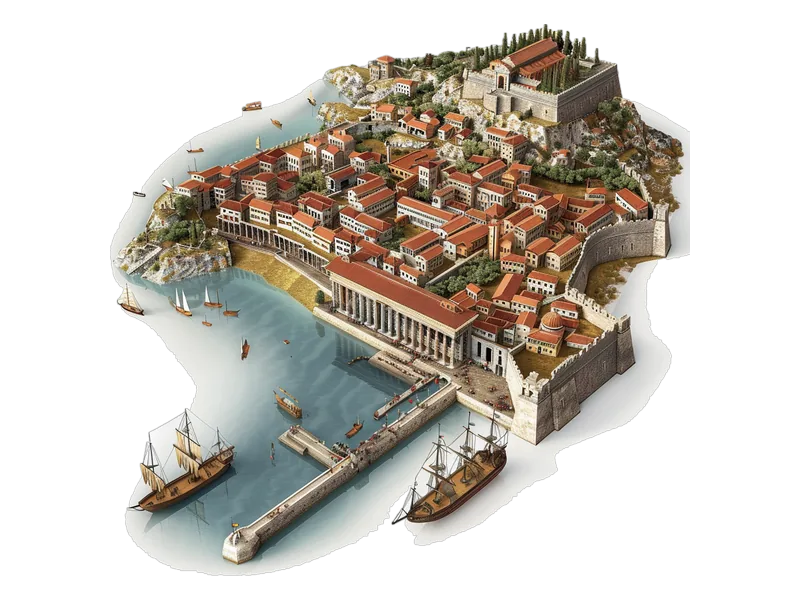
Chalcedon
What happened here
The Fourth Ecumenical Council at Chalcedon concluded a century of debate around Christ being both God and man (this is called “Christology”), asserting the unity of the single person of Christ in two distinct natures, divine and human. As a result breakaway communions emerged: Nestorians and Monophysites. Two great Christian leaders from this period were, in the West, Augustine of Hippo (354–430), and, in the East, John Chrysostom (d. 407).
People of interest
Leo the Great bishop of Rome
His Tome supplied much of the language the council used for two natures in one person.
Augustine of Hippo 354–430
North African bishop whose Confessions and City of God set the terms of Western theology for the next thousand years.
John Chrysostom d. 407
“Golden-mouthed” preacher of Antioch and Constantinople, exiled for telling the imperial court what he thought of it.
Meanwhile, in the other half
From here the map begins to fragment, and it never fully comes back together.
07
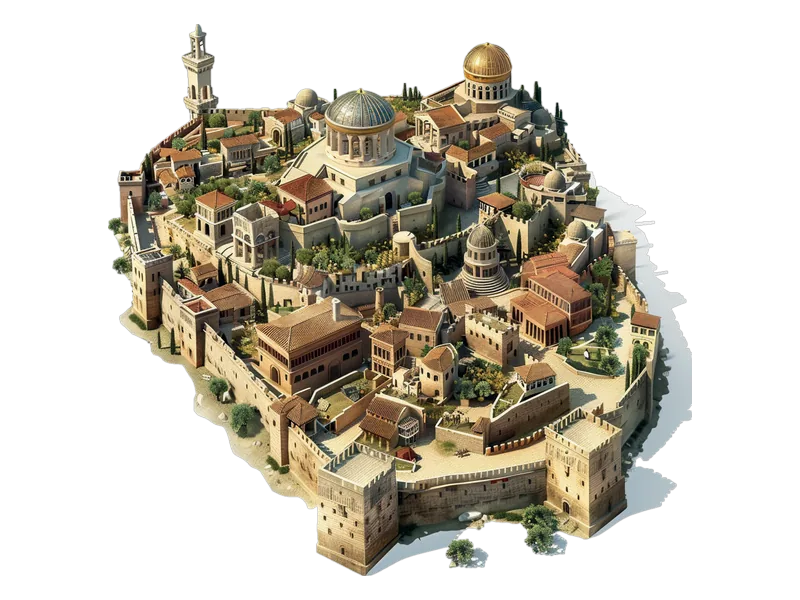
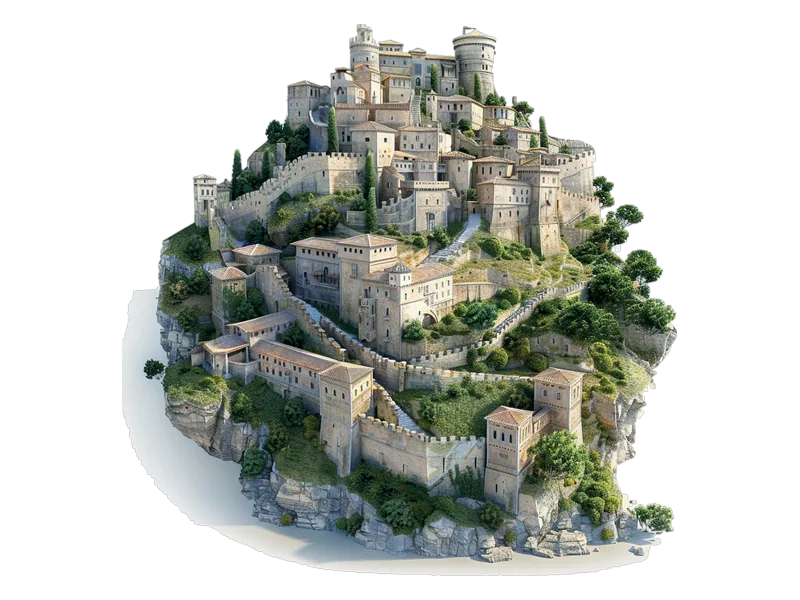
Monte Cassino
What happened here
When the Western Roman Empire collapsed, that part of the world became dominated by semi-Christian Barbarian peoples such as the Goths and Vandals. The church regrouped and survived thanks to the efforts of monks such as Benedict of Nursia, who founded a monastery at Monte Cassino, preserved western culture, and evangelised heretics and pagans. During the sixth and seventh centuries missionaries from Ireland, and later, in the seventh and eighth centuries, from what is now England, travelled abroad to evangelise, converting peoples from paganism to Christianity.
People of interest
Benedict of Nursia abbot, c. 480–547
Wrote a Rule moderate enough to be liveable and detailed enough to be copied; it became the template for all Western monasticism.
Columbanus Irish monk, d. 615
Planted monasteries from Gaul to northern Italy and told Frankish kings exactly what he thought of them.
Boniface missionary, d. 754
An Englishman who felled a sacred oak to prove a point to the Germans, organised their church, and was killed in Frisia.
Meanwhile, in the other half
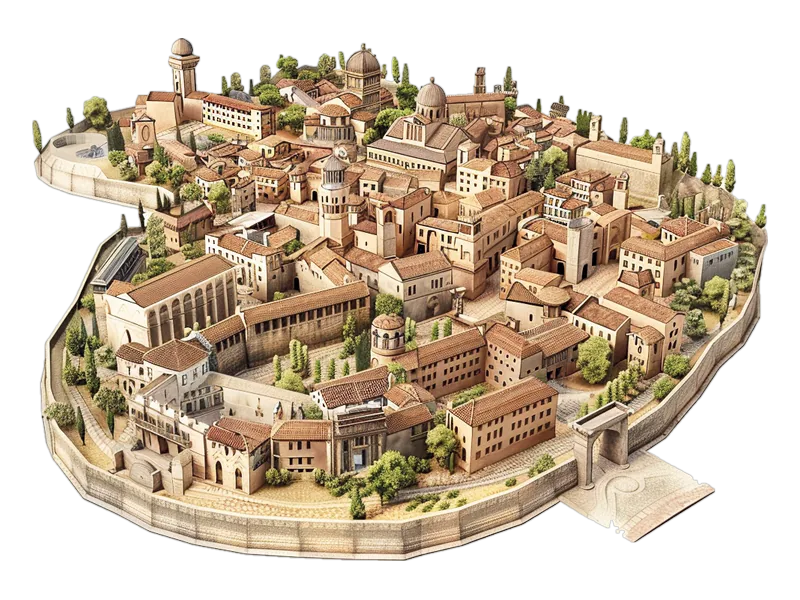
In the East, Constantinople: the empire survives intact, the councils continue, and icons become the great argument.
08
Constantinople
What happened here
Meanwhile, the Eastern Roman Empire survived and flourished, particularly under Emperor Justinian. The Fifth Ecumenical Council in 553 condemned three erroneous writings on Christology (Three Chapters), and the Sixth Ecumenical Council in 681 affirmed the teaching of Maxim the Confessor (d.662) that there are two wills in Christ. (The Seventh Ecumenical Council approved the veneration of icons.) However, towards the end of this period the Empire of Constantinople was shaken by controversy and discord, leading to a Dark Age which only finally ended in 843. The central monastery in Constantinople was at Studium.
People of interest
Justinian emperor, 527–565
Codified Roman law, reconquered part of the West, and built Hagia Sophia, the largest church in the world for the next thousand years.
Maximus the Confessor d. 662
Argued that Christ has a human will as well as a divine one, and had his tongue and right hand cut off for refusing to stop saying so.
John of Damascus theologian, d. 749
Wrote the definitive defence of icons from safety outside the empire, arguing that since God took flesh, matter can carry holiness.
Meanwhile, in the other half
In the West, Monte Cassino: the empire is gone and monks are the only institution still standing.
09
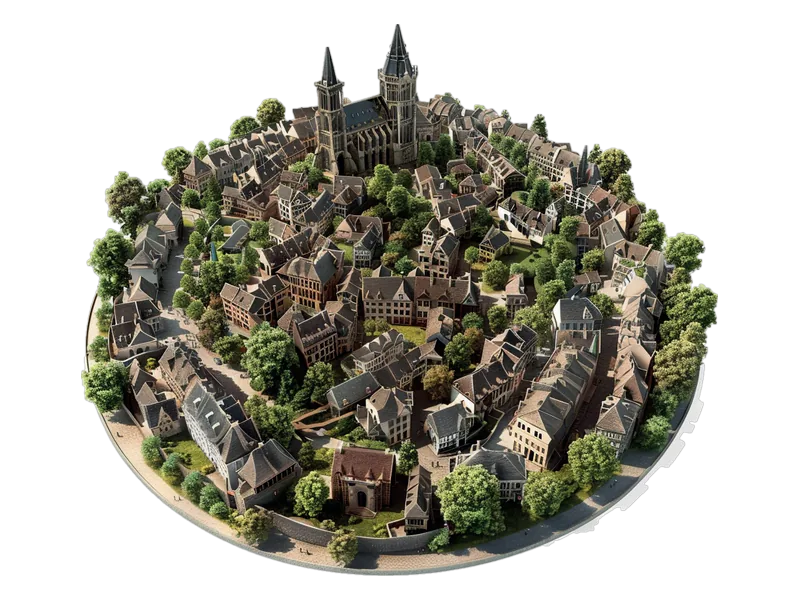
Aachen
What happened here
After centuries of instability and Barbarian rule in the West, it was the Franks, a Germanic, formerly Barbarian people, Christian since 498, that assumed a leading role in the western church, with their capital at Aachen. In 800 Charles the Great was proclaimed Emperor of the revived Holy Roman Empire. It was from here that much of Eastern Europe was evangelised, including Poland. From 910, Cluny became the epicentre for a movement to reform monasticism and the church. This was continued by the Cistercian movement in the 1000s and 1100s.
People of interest
Charles the Great emperor from 800
Ran a court that standardised the liturgy, the text of the Bible and handwriting itself, and fused kingdom and church into the idea of Christendom.
Alcuin scholar, d. 804
An Englishman from York who ran the palace school and organised the revival of learning that made the rest possible.
Odo of Cluny abbot, d. 942
Took a single reformed house and turned it into the hub of a network that would eventually reform the papacy itself.
Meanwhile, in the other half
In the East, Ochrid: Byzantine missionaries are Christianising the same Slavs from the opposite direction.
10
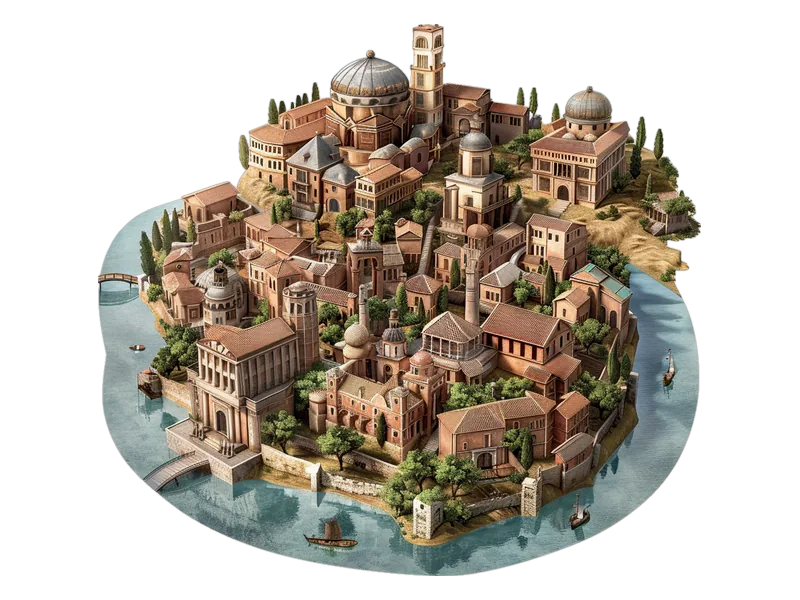
Ochrid
What happened here
From 843 onwards, the Eastern Roman Empire emerged from its Dark Age, and intensified missionary work in the Balkans and Eastern Europe, Christianising the Slavs inside and outside the Empire. The most famous missionaries were Cyril and Methodius, ministering to the kingdom of Moravia, and Clement of Ochrid (a centre for Christian learning in what was then Bulgaria). The Christian East and West split away from one another in 1054.
People of interest
Cyril and Methodius ninth century
Brothers from Thessalonica who invented an alphabet for Slavonic and translated the Bible and the liturgy into it, against considerable opposition.
Clement of Ochrid bishop, d. 916
Their disciple, who trained thousands of clergy here and made Ochrid the school of Slavic Christianity.
Photius patriarch of Constantinople
His dispute with Rome over authority and the filioque clause sharpened the differences that became the split of 1054.
Meanwhile, in the other half
In the West, Aachen: the Franks are evangelising the same peoples from the other side.
11
Cluny
What happened here
Following on from the reform movement centred at monasteries at Cluny and Cîteaux, the western church experienced the height of its power under Pope Gregory VII and Pope Innocent III. This was the age of the Crusades. In the 1200s, new monastic movements such as the Franciscans and Dominicans emerged. In Christian thought this is the time of Thomas Aquinas. The triumph of the church was expressed in the magnificent Gothic architecture of cathedrals such as the one at Chartres.
People of interest
Gregory VII pope, 1073–85
Claimed the right to appoint bishops against the emperor and made Henry IV wait three days barefoot in the snow at Canossa.
Innocent III pope, 1198–1216
Under him the papacy reached its greatest political power, calling councils and crusades and deposing kings.
Thomas Aquinas friar, 1225–74
Dominican who taught at Paris and set out to show that Aristotle’s philosophy and Christian doctrine belong together; Catholic theology still argues with him.
Meanwhile, in the other half
In the East, Kyiv: Orthodoxy is turning inward, toward the experience of salvation.
12
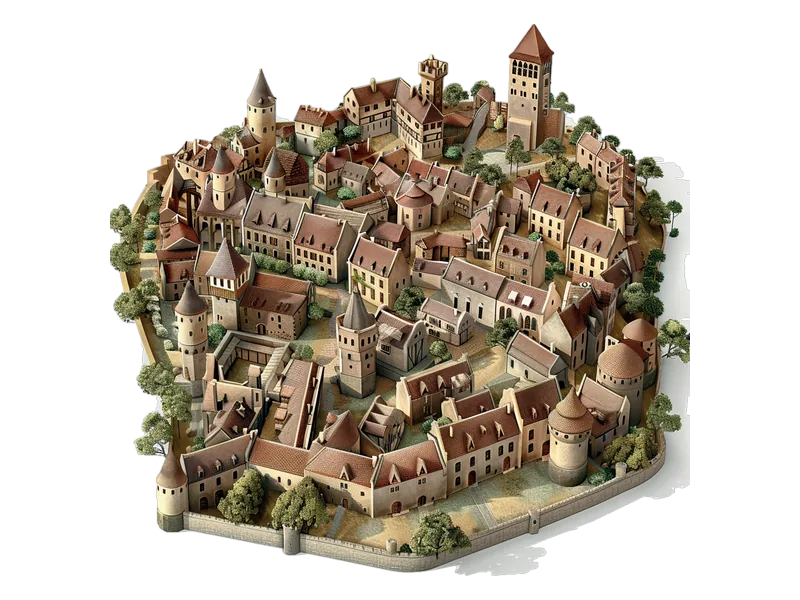
Kyiv
What happened here
In the second millennium, the focus of Eastern Orthodoxy shifted from the incarnation to the subjective experience of salvation, crystallised in the concept of “theosis” (become united to God). As Constantinople waned, the new centre of gravity in the Orthodox world became the Principality of Rus’ with its capital at Kyiv, and later Moscow. When the Empire of Constantinople collapsed in 1453, it was the ruler of Rus’ (later Russia) who took on the mantle of the Christian Emperor, Caesar or “Tsar”.
People of interest
Vladimir of Kyiv baptised c. 988
His envoys reportedly returned from Hagia Sophia saying they had not known whether they stood on earth or in heaven.
Gregory Palamas theologian, d. 1359
Defended the monks who claimed to experience God’s uncreated light, giving theosis its formal theological grounding.
Sergius of Radonezh monk, d. 1392
Founded the monastery near Moscow that made the northern city a spiritual centre as well as a political one.
Meanwhile, in the other half
In the West, Cluny: papal power at its height, new orders of friars, and the first universities.
13
Avignon
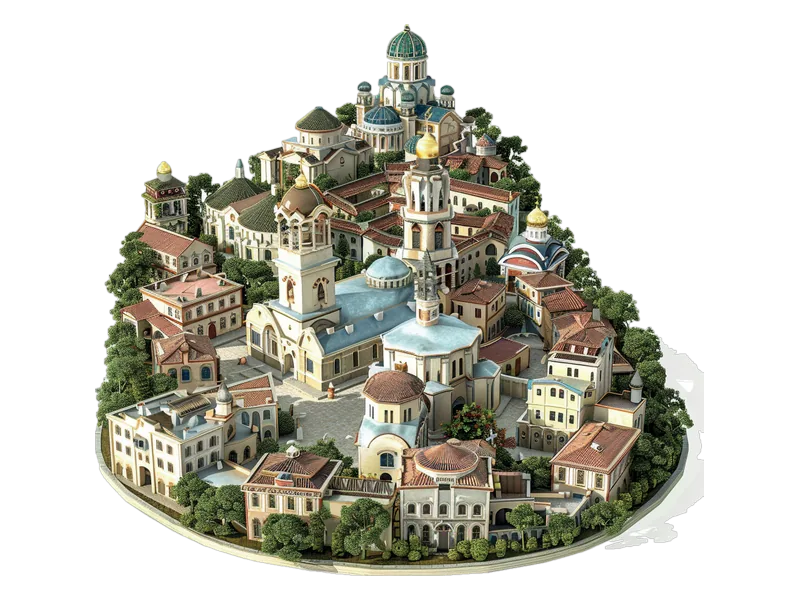
What happened here
In the 14th and 15th centuries, the western church experienced two crises: the Babylonian Captivity of the Church (1309–1376) and the Great Western Schism (1378–1417). For a time, Avignon in France was the residence of the Pope. As a result, there was a general consensus to seek root-and-branch reform of the church. Prominent early reformers at the time included John Wycliffe (1300s) and Jan Hus (1400s).
People of interest
Catherine of Siena laywoman, d. 1380
Had no official standing whatever, and wrote to the pope in Avignon until he returned to Rome.
John Wycliffe Oxford scholar, d. 1384
Attacked papal authority and set the English Bible in motion; his followers were nicknamed Lollards.
Jan Hus Czech preacher, d. 1415
Said much the same thing in Bohemia and was burned at Constance, despite holding a safe conduct.
Meanwhile, in the other half
Kyiv and then Moscow carry the Orthodox line; Constantinople itself falls in 1453.
14
Wittenberg
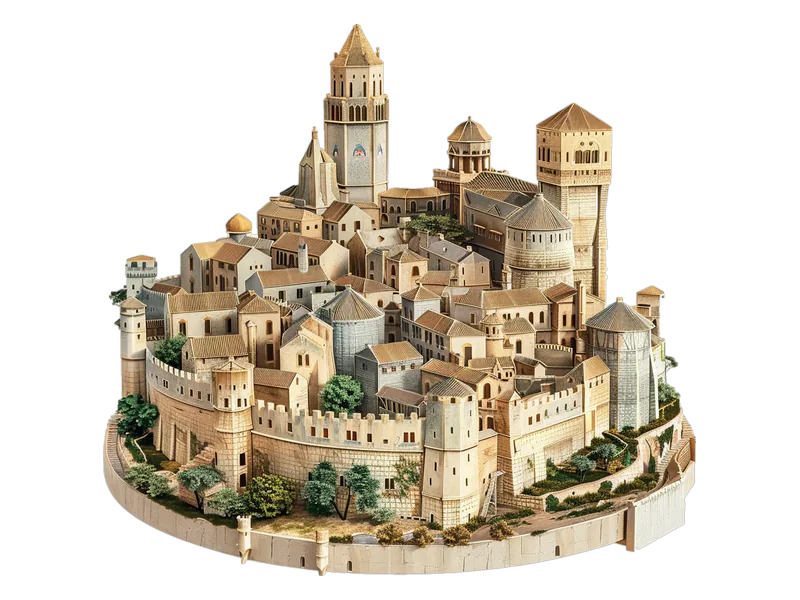
What happened here
The Protestant Reformation began with Martin Luther (1483–1546) nailing his 95 theses at Wittenberg in Germany, and later by Zwingli’s ministry at the Grossmünster church in Zurich. The Reformation represented a rediscovery of the gospel, proclaiming the supreme authority of Scripture, justification by faith alone, and the priesthood of all believers.
On the Continent, the Anabaptists represented the radical wing of the Reformation, viewing the Christian faith as requiring a deliberate, personal decision to follow Christ, expressed in believer’s baptism. In Britain, some Protestants, nicknamed “Puritans”, didn’t think the English Reformation had gone far enough. Some wanted a reformed church like in Switzerland, while others formed autonomous “gathered churches” based on voluntary membership and free from the influence of the state (“Independent churches”).
People of interest
Martin Luther 1483–1546
Went from protesting indulgences to denying that popes and councils outrank Scripture, and translated the Bible into a German that shaped the language itself.
Huldrych Zwingli d. 1531
Reformed Zurich along parallel lines and fell out irreparably with Luther over the meaning of the Lord’s Supper.
Menno Simons d. 1561
Joined the Anabaptists after the Münster disaster and gave the peaceable wing of the movement its name and its shape.
Meanwhile, in the other half
Rome answers at Trent, and Moscow declares itself the third and final Rome.
15
Three “Romes”
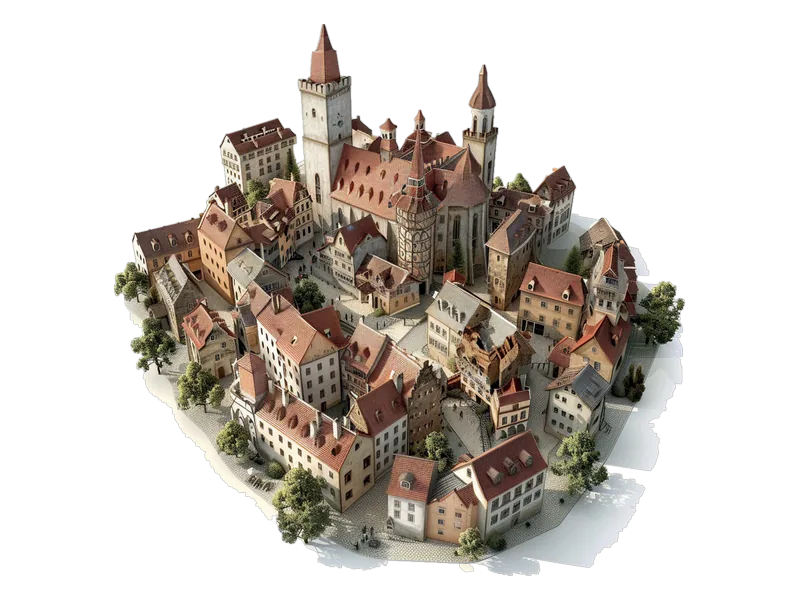
What happened here
The Roman Catholic response to the Reformation was the Council of Trent and the Counter-Reformation, reasserting the teaching of the church, and control of territory and the faithful. By the 1600s, the centre of the Roman Catholic world was the kingdom of France ruled by Louis XIV. Starting with Richard Simon, a more liberal approach to the Bible became more and more prevalent. As the tide turned, the Jesuits, staunch defenders of the Counter-Reformation, were officially suppressed in 1773.
In the Orthodox East Cyril Lucaris, a Patriarch of Constantinople, later sympathised with the Reformation, but the subsequent Council of Bethlehem ruled against the teachings of the Reformation. As Moscow came to replace Constantinople as the centre of the Orthodox world, it was taught that “two Romes have fallen, the third stands (i.e. Moscow), and there will be no fourth”.
People of interest
Ignatius Loyola Rome, d. 1556
Founded the Jesuits in 1540: an order built for education, mission and obedience, and the sharp end of the Counter-Reformation.
Cyril Lucaris Constantinople, d. 1638
Published a confession that read like Calvin’s, corresponded with Protestant Europe, and was strangled by order of the Sultan.
Ivan IV Moscow, crowned 1547
The first ruler crowned Tsar, taking up the claim that Moscow had inherited the mantle of the Christian empire from fallen Constantinople.
Meanwhile, in the other half
Leyden: Protestants are writing confessions, consolidating, and arguing among themselves.
16
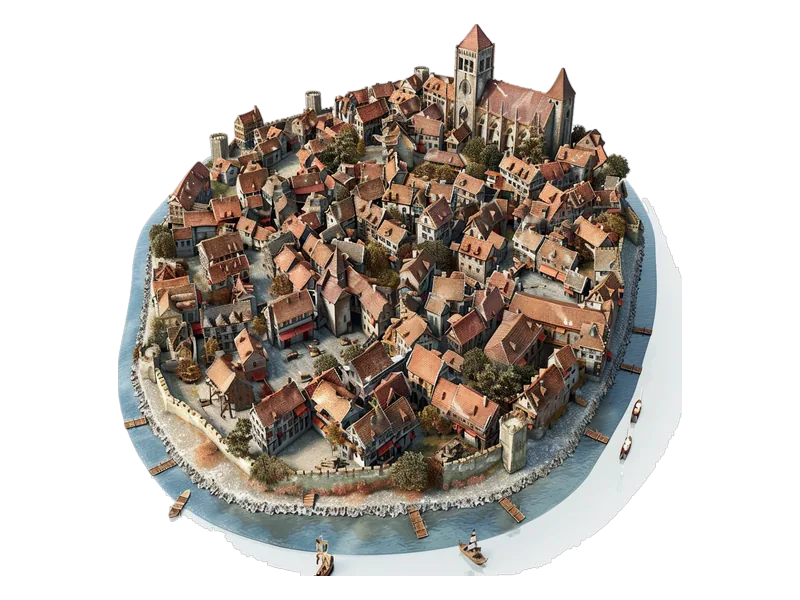
Leyden
What happened here
After the heady days of the Reformation, the following century (1600s) saw a need to consolidate and also to contend for the faith. Protestant confessions such as the Formula of Concord (Lutheran) and the Westminster Confession (Puritan) formulated new orthodoxies, while the Anabaptist movement was continued by the Mennonites, mainly based in Germany and the Netherlands.
In the 1600s, the Netherlands, including the university town of Leyden, was the centre of the Protestant world, and produced the leading theological works, as well as providing toleration for religious minorities. It was in the Netherlands that some English Independents (see above), influenced by the Mennonites, came to embrace believer’s baptism — the first Baptists.
People of interest
John Robinson pastor, d. 1625
Led the English separatist congregation here, part of which sailed on the Mayflower without him.
John Smyth separatist, d. 1612
Concluded that infant baptism was invalid, baptised himself, and began the first English Baptist congregation.
Jacobus Arminius Leyden professor, d. 1609
His questions about predestination provoked the Synod of Dort and an argument that has not finished yet.
Meanwhile, in the other half
Rome, having answered at Trent, is confident, disciplined and expanding overseas.
17
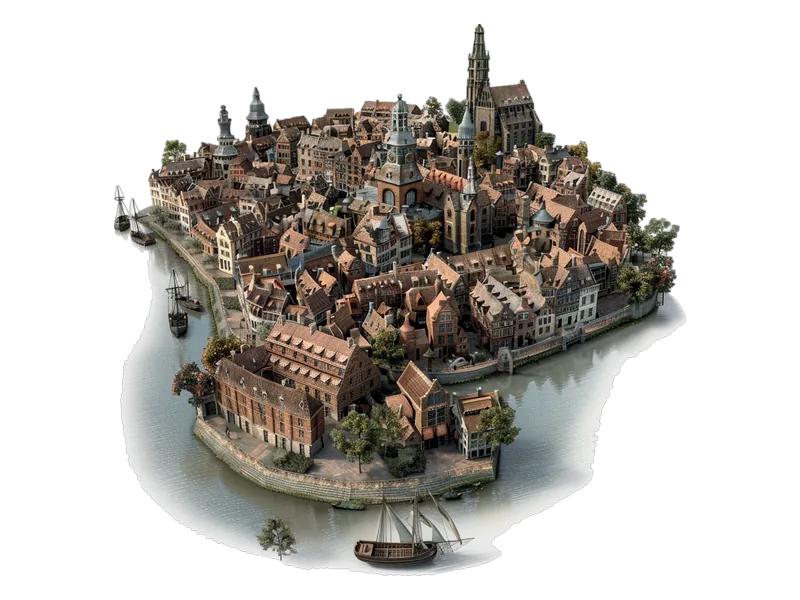
Halle
What happened here
By the end of the 1600s, the years of conflict and controversy, combined with new freedoms, created a need to return to “heart religion”, and the experience of personal conversion, preached by Jonathan Edwards in the American colonies, and advocated in Germany by the Pietists and Moravians (the latter were based at a country estate in Germany called “Herrnhut”). The Pietist movement founded a university at Halle which became a centre first for “heart religion” and later for rationalist doubt (e.g. Christian Wolff d.1754).
Through John Wesley, the Moravians influenced the Methodist Revival in the English-speaking world. The revivals served to rekindle Christian zeal in the Church of England, and also in the independent churches. At the same time, the values of the Enlightenment influenced many churches in a rationalist (liberal) direction.
People of interest
August Hermann Francke Halle, 1663–1727
Built the Pietist machine at Halle — orphanage, schools, printing house, mission training — that supplied the first Protestant missionaries.
Count Zinzendorf Herrnhut, 1700–60
Let Moravian refugees settle on his estate, and after a renewal in 1727 led them into a missionary effort out of all proportion to their numbers.
John Wesley 1703–91
Met Moravians in an Atlantic storm, envied their lack of fear, and after his own conversion rode Britain preaching for fifty years.
Meanwhile, in the other half
Catholic Europe is heading toward the Revolution; the Jesuits are suppressed in 1773.
18
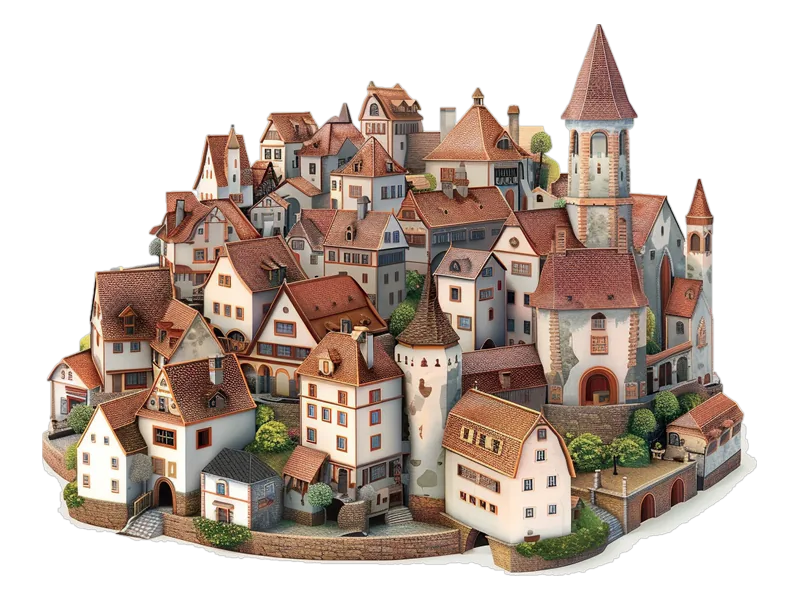
Lourdes
What happened here
After the catastrophe of the French Revolution, Roman Catholic faith likewise experienced a revival in France and elsewhere, often driven by folk devotion such as visions of the Virgin Mary at Lourdes.
In the Orthodox East, the Philokalia movement revived the Greek Orthodox Church, and also the Orthodox Church in Russia with a renewed interest in the mystical wisdom of Desert Fathers such as Macarius.
People of interest
Bernadette Soubirous 1844–79
A miller’s daughter of fourteen who reported eighteen visions at the grotto in 1858; the shrine now draws millions of pilgrims a year.
Nikodemos Mount Athos, d. 1809
Compiled the Philokalia, the anthology of monastic writing that carried this spirituality from Athos into Russia.
Seraphim of Sarov monk, d. 1833
Spent years as a hermit and then received thousands of visitors, embodying the same renewal in the Russian church.
Meanwhile, in the other half
London: Protestant revival, abolition, and the great missionary societies.
19
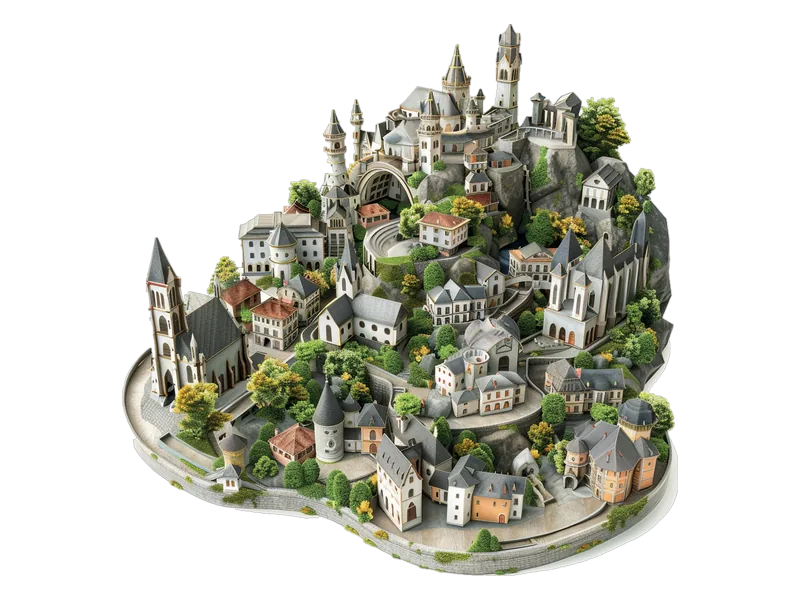
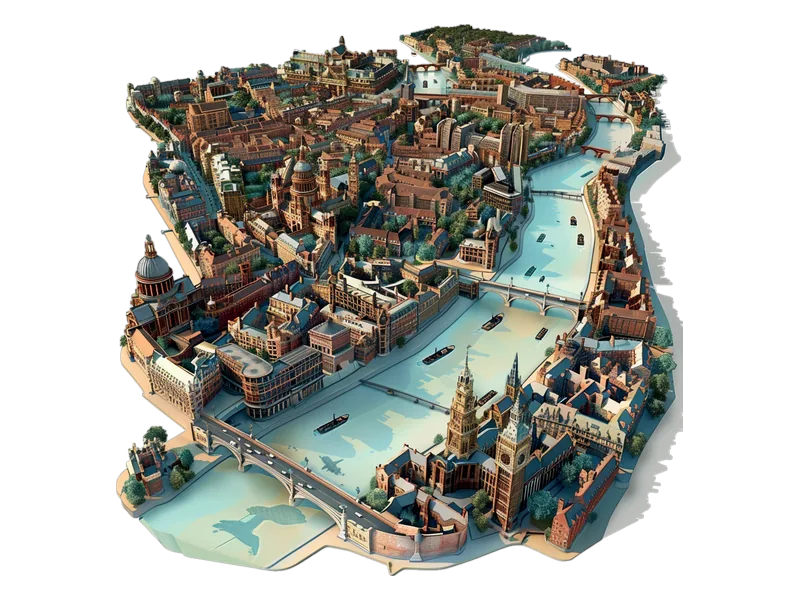
London
What happened here
Following on from the revivals of the 1700s, during the long 19th century (1789–1914), Christian faith experienced several more periods of revival in the English speaking world both sides of the Atlantic: from 1791 (Second Great Awakening), from 1859 (Third Great Awakening), and from 1904 (Fourth Great Awakening). On the continent of Europe, Protestant faith was likewise revived (Le Réveil / Erweckung). At this time, London was the world’s leading city, and preachers such as Charles Spurgeon (Baptist) held major influence.
People of interest
Charles Spurgeon 1834–92
Filled the Metropolitan Tabernacle twice every Sunday for thirty years and published sermons that sold in the millions.
William Wilberforce 1759–1833
Spent twenty years pushing abolition through Parliament and died three days after the decisive vote.
William Booth 1829–1912
Began preaching in the East End and built the Salvation Army around the principle that you feed people before you preach at them.
Meanwhile, in the other half
Lourdes: Catholic and Orthodox renewal is running on quite different fuel.
20
The ends of the earth
What happened here
The Age of Discovery, begun in the late 1400s by Portugal and Spain, prompted a worldwide missionary movement to newly discovered lands and people — first by the Orthodox and Roman Catholics, and later by Protestants.
Pioneers of Protestant missionary work were the Dutch in South East Asia, the English in North America, and the German Pietists in the Danish colonies.
Mission in sub-Saharan Africa took off in the 19th century, with missionaries such as David Livingstone. By the late 19th century, another “front line” of missionary work was China (despite several phases of Christian missionising since the 600s). At the missionary conference in Edinburgh in 1910, China was represented by Cheng Jingyi who died in Shanghai in 1940.
People of interest
Bartholomäus Ziegenbalg Tranquebar, d. 1719
Sent from Halle to the Danish colony in India, he learned Tamil, translated the New Testament into it, and set the pattern for Protestant mission.
David Livingstone 1813–73
Missionary and explorer whose journeys across southern and central Africa turned British attention — and the missionary societies — toward the interior.
Cheng Jingyi 1881–1939
Told the Edinburgh conference in 1910, in seven minutes, that China wanted the church without the denominations the West had brought with it.
Meanwhile, in the other half
Everything else in this story is now happening in a great many more places than one map can hold.